Saturday came in two parts: in the morning I soldered together an 80 m fox transmitter, and in the afternoon I operated the Marconi Memorial VHF CW contest from the HG5A contest station on Hármashatár-hegy.
An 80 m fox transmitter
The other half of Thursday’s HEStore order was the parts for a fox hunting transmitter. The RF comes from a Pierce oscillator built on a 74HC00 with a 3579.5 kHz crystal, and a Digispark keys it in Morse. The foxes send the usual MOE, MOI, MOS, MOH and MO5 at 8 WPM, with my callsign after every twentieth repeat. A single number in the sketch decides which message a fox sends, so the same code goes on every one.
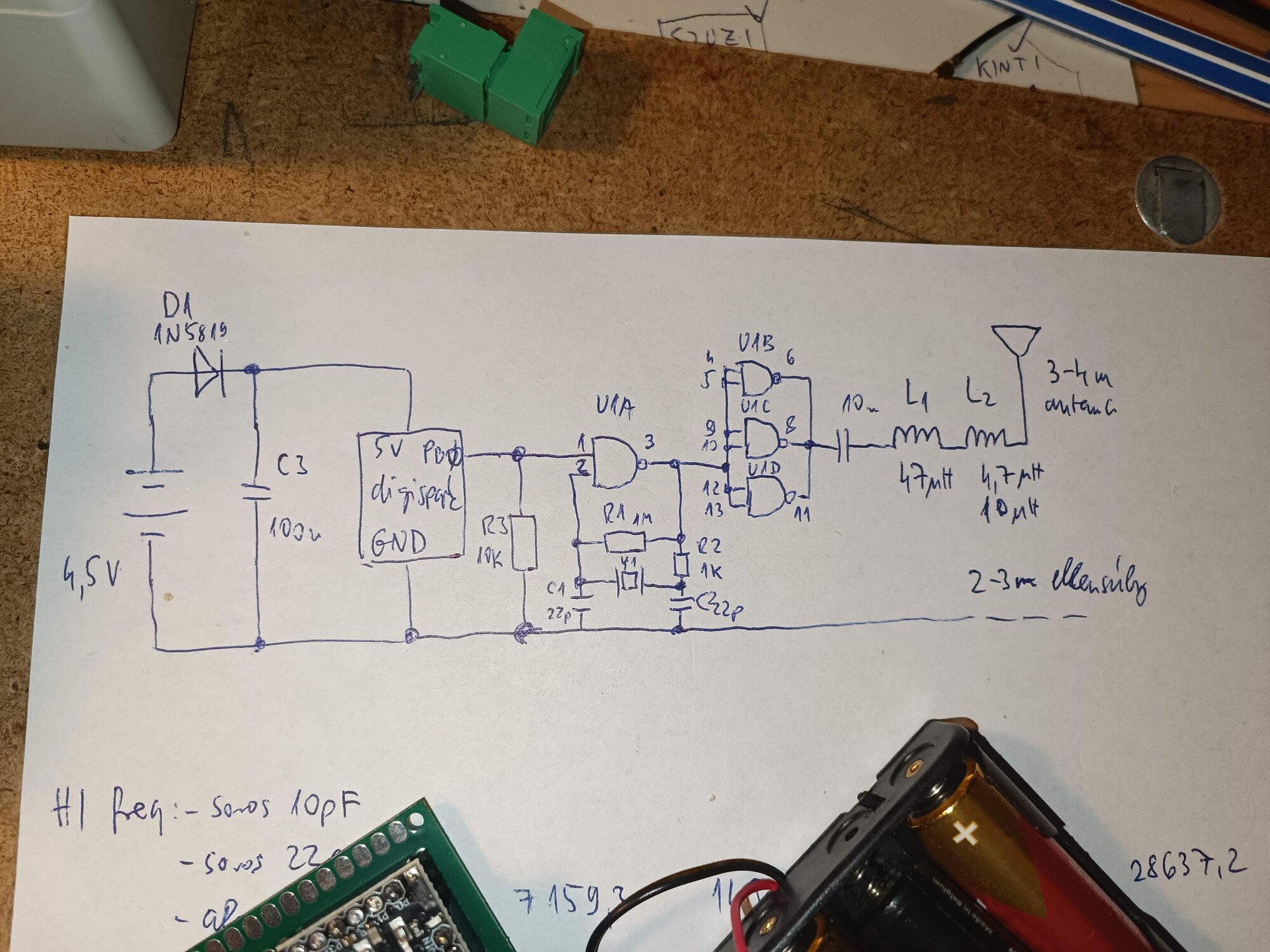
Power comes from three AA cells through a 1N5819 Schottky diode. The Digispark’s output drives one input of U1A, the oscillator gate, with a 10 kΩ pull-down, so the gate itself starts and stops the oscillation. The other three gates in parallel act as a buffer, followed by a 10 nF coupling capacitor and two inductors in series (47 µH and 4.7 µH) feeding a 3–4 m wire antenna against a 2–3 m counterpoise.
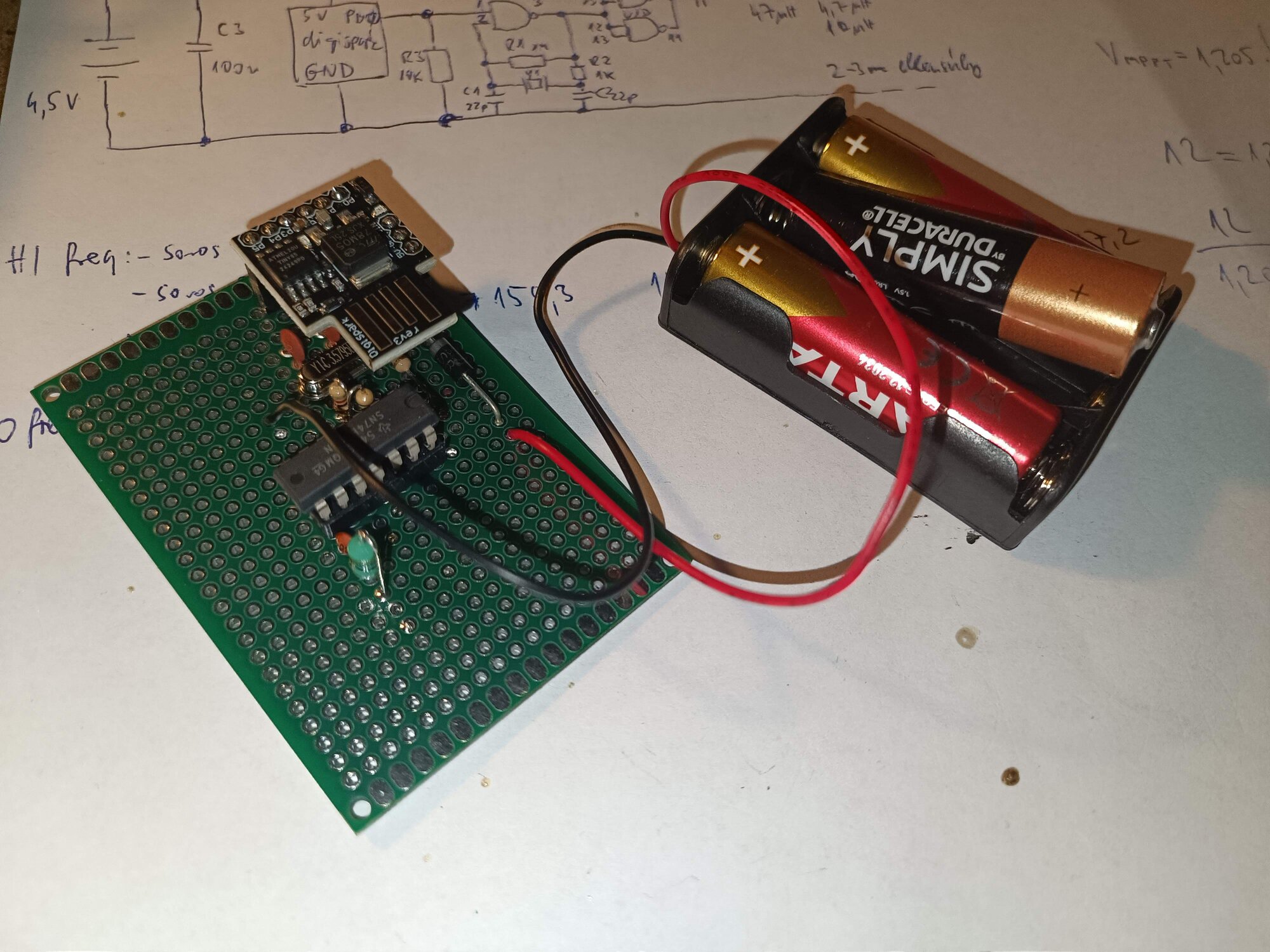
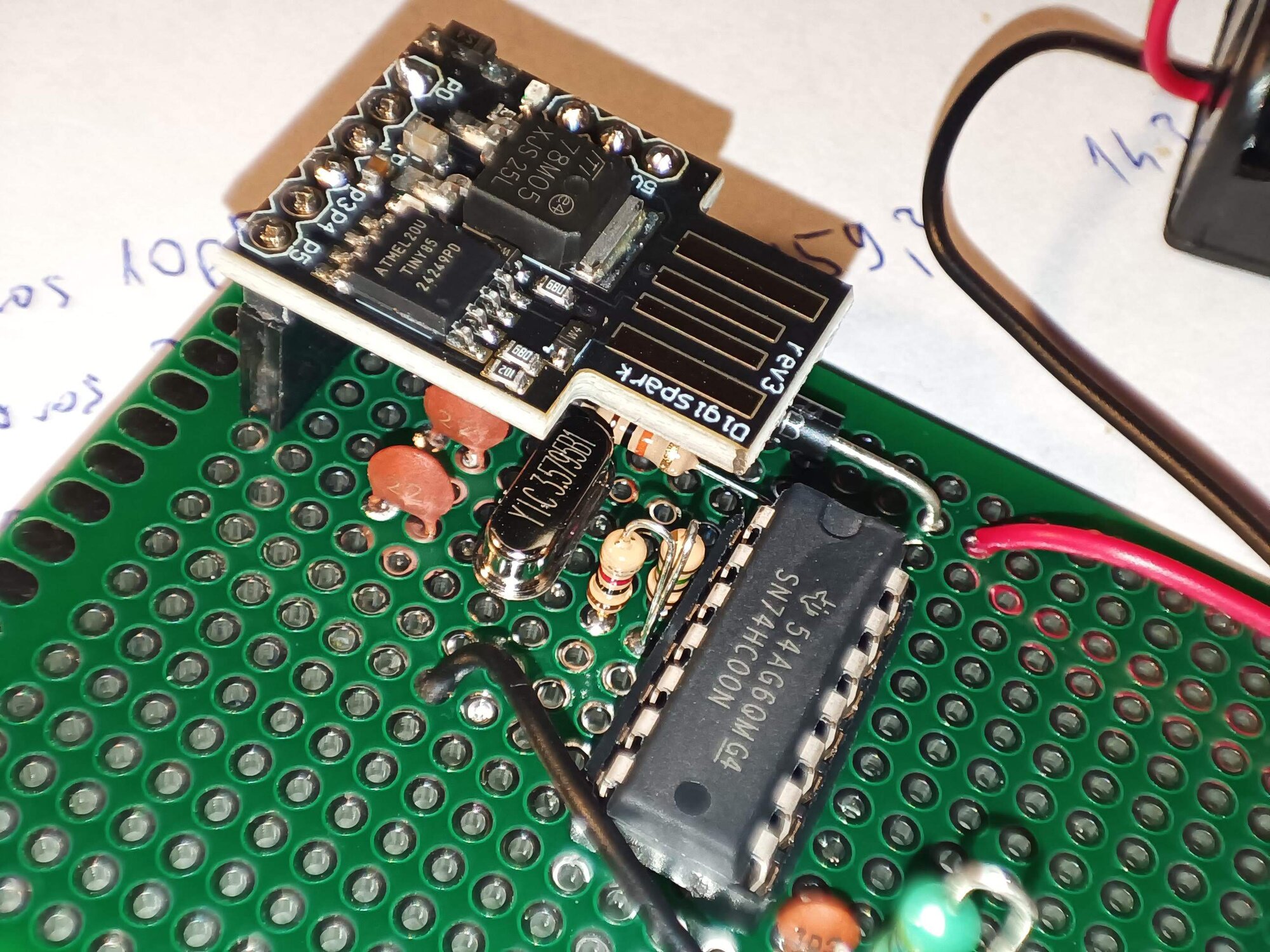
The working prototype is in this video, with the (tr)uSDX receiving the MOI message.
It still needs a box, and I need to check whether the output needs a filter: a logic gate puts out a square wave, and that comes with strong harmonics.
The Marconi Memorial from HG5A
The contest started at 14:00Z at the Hármashatár-hegy station, which made this the inauguration of the freshly painted shack, if we’re being a bit grand about it. I had a six-hour block under my own callsign, with my own IC-9700 and the same gear I use for the URH Puskás Kupa contests. Only the antenna and the rotator belonged to the station.
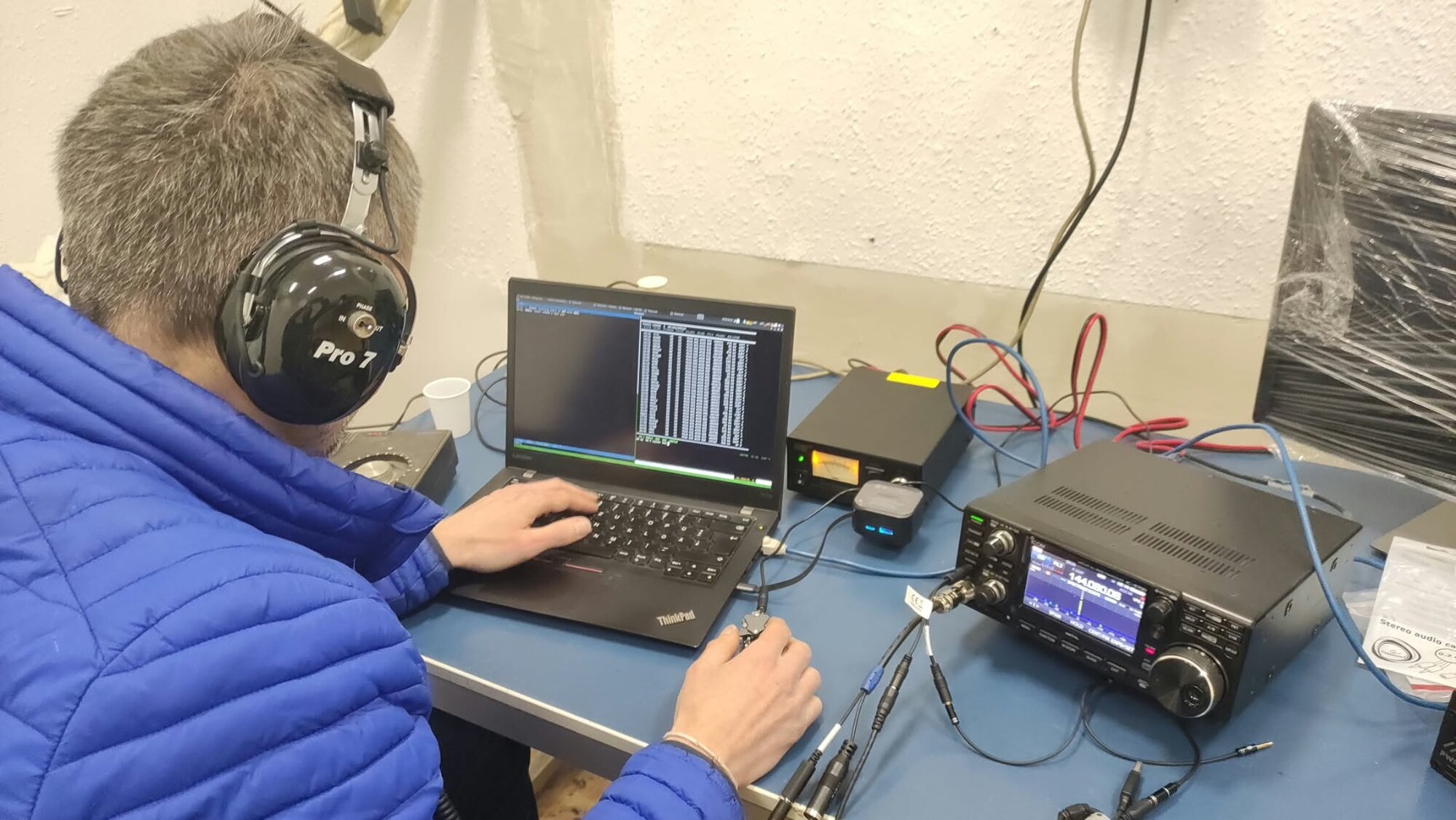
- QSOs: 48, all on 2 m CW
- Score: 9334 (one point per kilometre)
- First and last QSO: 14:10Z and 20:09Z
- Longest QSO: LZ2FP, KN13SE, 604 km
The orange dot is HG5A (JN97LN); the green dots sit at the centre of each station’s locator. Click one for the callsign, time and distance.
The 48 QSOs came from ten countries: 16 Hungarian, 11 Slovak, 4 each from Croatia, Slovenia, Czechia and Serbia, 2 Romanian, and one each from Italy, Poland and Bulgaria. The average was 194 km per QSO. After LZ2FP in Bulgaria, the furthest were SN7L in Poland (409 km) and YT4B in Serbia (378 km).